
October 06, 2026
Generation-forward: can you insulate your organisation from both sides of the energy cost squeeze?
For most of the last decade, controlling a commercial energy bill largely meant controlling the unit rate. If you bought well, timed the market, and kept the contract under review, your organisation had a reasonable grip on its energy cost.
That approach doesn’t hold its own anymore, because the bill itself has changed shape. Cost is now driven by two very different pressures, and they don’t respond to the same things.
What are the two pressures impacting commercial energy bills?
The first is due to wholesale price volatility. Triggered by Russia’s invasion of Ukraine and sustained by ongoing instability in the Middle East, unit price has dominated the energy conversation for the better part of five years. It’s unpredictable, but it is also two-directional and falls as well as rises.
The second is what’s known as structural. Beneath the wholesale market sit regulated non-commodity charges, which are the costs of operating, balancing and rebuilding the UK’s energy system. These now represent more than half of a typical commercial electricity bill (source: Ofgem), and they behave very differently from wholesale prices. They don’t fall when markets calm. They are policy-driven, and on an upward trajectory that is likely to continue regardless of conditions in the Middle East or on the trading floor.
The result is a two-sided squeeze with unpredictability at one end of the bill and sustained, structural inflation at the other. If you’re drawing all your power from the grid, both forces apply simultaneously and in full.
Why does procurement only address one pressure point?
The difficulty is that the most common response, procurement, only works on one side.
A competitive contract or well-judged purchasing strategy can reduce exposure to wholesale volatility, but it does little about structural charges, which are regulated and largely fixed in how they apply. They cannot be negotiated away, and changing supplier doesn’t remove them. As long as electricity is drawn from the grid, these charges are drawn with it.
This is why a unit-rate focus can deliver diminishing returns. An organisation can manage the portion it can influence and still see its total bill climb, because the structural part was never going to respond to procurement in the first place.
What are demand-side levers, and what are their limits?
This isn’t to say the structural half is entirely beyond influence, because some non-commodity charges are linked to how much electricity is consumed, and others to when it is used. Efficiency and flexibility are two operational levers that have the potential to reduce exposure to them.
Using less electricity can reduce the consumption-linked charges applied to every imported unit, while shifting demand away from periods of high demand can reduce exposure to the charges weighted towards those windows. Both are worthwhile and should form part of any sensible energy strategy.
What response works on both parts of the bill?
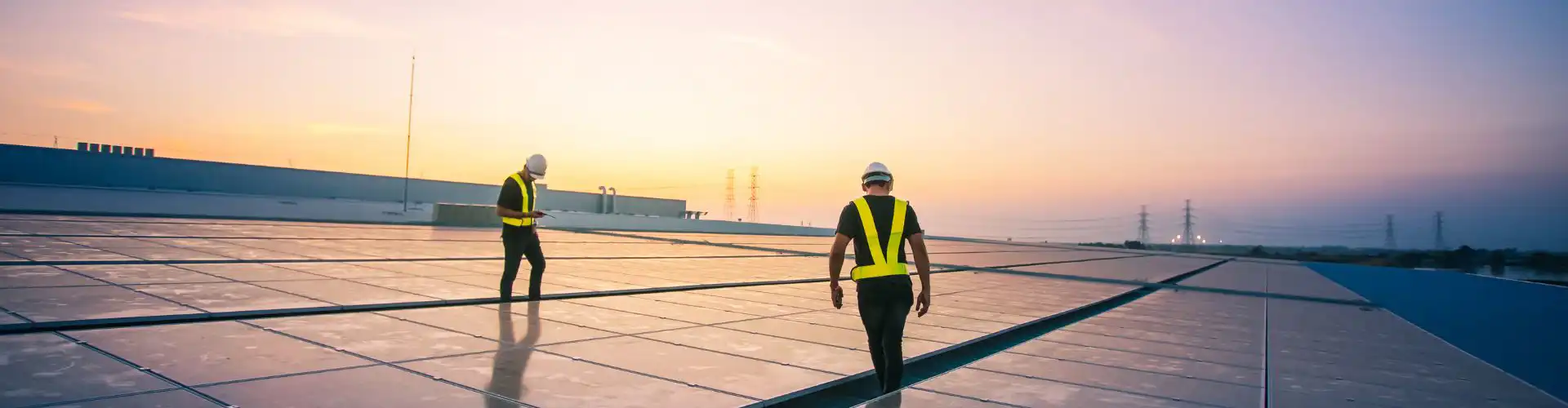
One response that reduces both pressures at the same time is on-site generation.
In simple terms, every unit of electricity generated on-site doesn’t need to be imported, so that directly lowers exposure to wholesale prices, because less power is being bought from the market, while also reducing the consumption-linked elements of non-commodity charges, because those are applied to imported electricity. Generating on-site reduces grid imports, and in doing so it works against both sides of the squeeze together.
This is fundamentally different approach from procurement, which manages an organisation’s exposure to the market. Generation reduces how much exposure there is to manage.
Can sharpening the strategy with storage and tariff optimisation make a difference?
On-site solar addresses the volume of electricity imported, then battery storage and intelligent tariff design can refine that advantage further.
Storage allows generated power to be held and then deployed at a time when importing would be most costly, building flexibility into the model. Then, a well-designed tariff can help ensure that timing is properly rewarded. The crucial foundation is reducing how much electricity is imported, with storage and tariff making each remaining unit work harder.
How do you move from exposure to ownership?
A generation-forward strategy changes has the potential to change an organisation’s position, rather than just its costs.
Instead of attempting to anticipate two markets that cannot be controlled, it reduces how much of the organisation’s energy depends on either of them. Wholesale prices can’t be controlled, and regulated charges can’t be negotiated away, but the proportion of electricity that has to come from a system carrying both pressures can be reduced.
That is what it means to insulate an organisation from both sides of the squeeze: not predicting the markets but depending less on them.
Through the combined expertise of @Centreco and @Equity Energies, we help organisations design integrated energy strategies that better balance affordability, security and sustainability.
Projected savings, payback periods and operational benefits will vary depending on site demand profile, tariff structure, system design and future market conditions.


